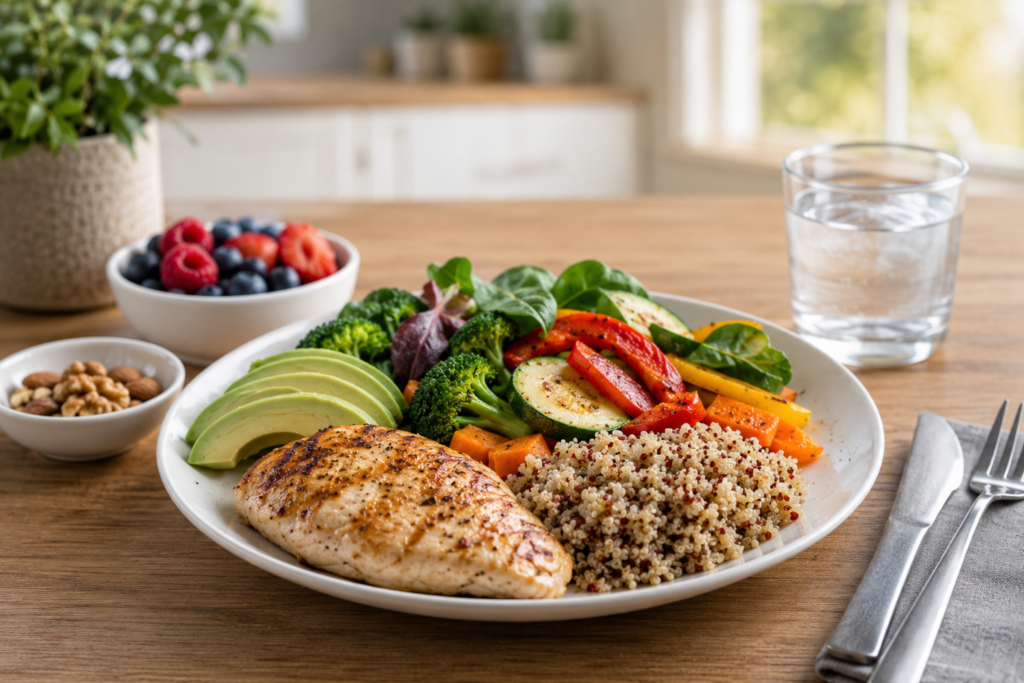
Snacking gets a bad reputation. One person says you should never eat between meals. Another says you need several snacks every day to keep your energy up.
The truth is less dramatic.
A snack is simply food eaten between meals. Whether it helps or hurts your diet depends largely on what you choose, how much you eat, and why you’re eating it.
Research reviewed by Harvard’s Nutrition Source suggests that snacks can be part of a healthy diet, but their nutritional quality varies considerably.1
- Sometimes you’re genuinely hungry because lunch was several hours ago.
- Sometimes you need something small before exercise.
- Sometimes you’re sitting at your desk and realize you haven’t eaten since breakfast.
- And sometimes you’re simply craving something salty or sweet.
All of those situations are normal.
The goal isn’t to eliminate snacking. It’s to have enough healthy snack ideas available that you don’t have to rely on cookies, candy, chips or whatever happens to be closest when hunger hits.
This guide brings together 25 practical options, including high-protein snacks, high-fiber choices, sweet and savory ideas, and familiar foods from both Asian and European eating patterns.
If you want to read full guide on balanced diet read our article “What is Balanced Diet?”
What Makes a Snack Healthy?
There isn’t one official food that qualifies as a “healthy snack.”
A nutritious snack is usually one that contributes useful nutrients without giving you a large amount of added sugar, sodium or unhealthy fats.
Think about foods such as:
- Fresh fruit
- Vegetables
- Nuts and seeds
- Plain yogurt
- Eggs
- Beans and chickpeas
- Whole grains
- Hummus
- Avocado
WHO recommends eating a varied diet built around foods such as vegetables, fruits, legumes, nuts and whole grains while limiting excess free sugars, salt and unhealthy fats.2
That doesn’t mean every snack needs to contain every nutrient. An apple is perfectly reasonable on its own.
But if you’re very hungry, an apple paired with peanut butter or yogurt may be more satisfying. The best snack depends on the situation.
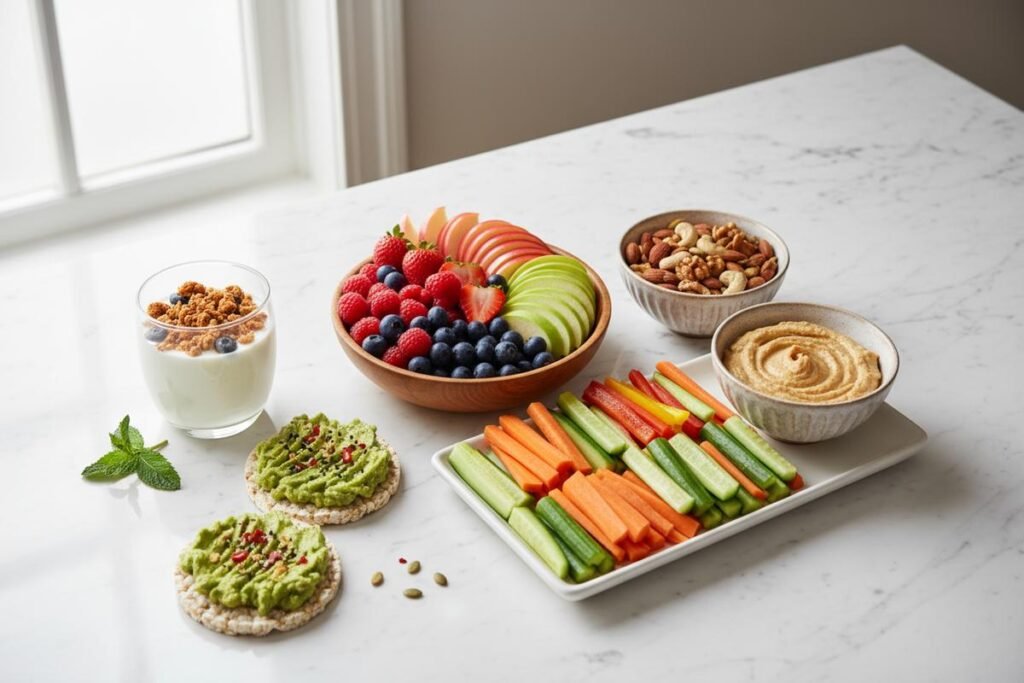
Do You Need to Snack Between Meals?
Not necessarily.
Some people naturally get hungry between meals. Others are perfectly comfortable eating three larger meals without snacks. There is no universal rule saying that everyone needs two snacks a day.
Harvard’s review of snacking research notes that snacks can be useful for managing hunger and adding nutrients, but frequent snacking isn’t automatically healthier. What matters is the overall quality of the diet and the foods chosen.
Before grabbing something to eat, it can help to ask: Am I physically hungry? If yes, eat.
If you’re bored, stressed or simply looking for something to do, you might want to pause for a few minutes and see whether the craving passes.
Neither situation makes you “bad.” It’s simply useful to understand why you’re eating.
25 Healthy Snacks to Try
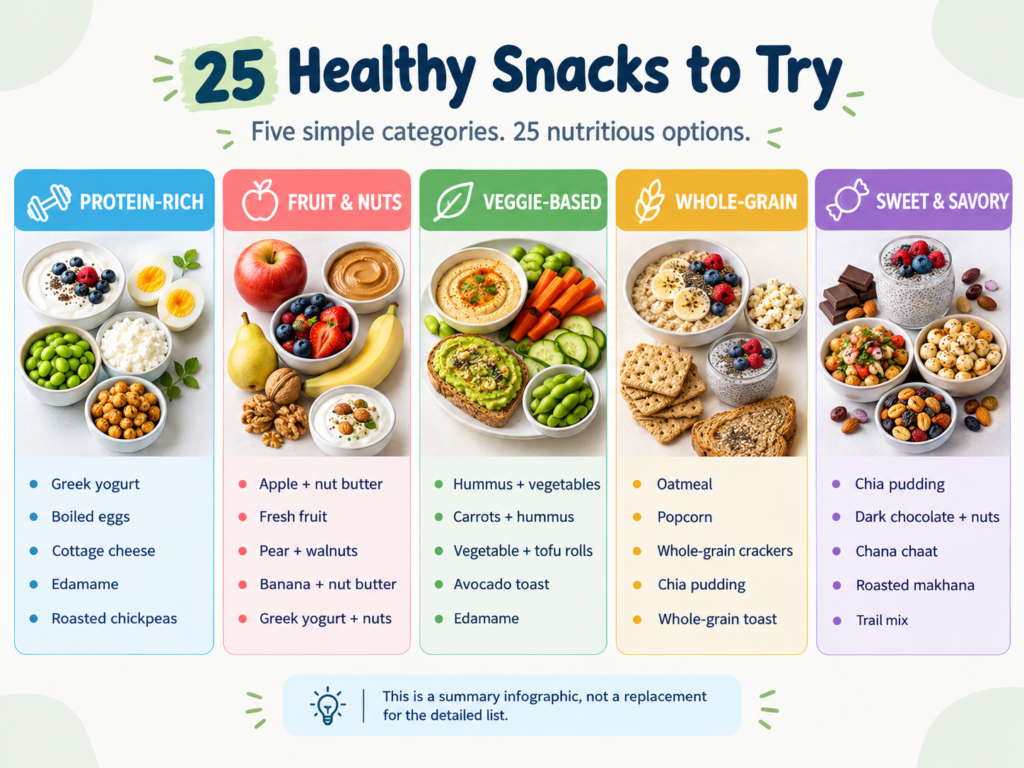
1. Greek Yogurt With Berries
Plain Greek yogurt is a convenient source of protein, while berries provide fiber and natural sweetness.
Add:
- Strawberries
- Blueberries
- Raspberries
- Blackberries
You can also add a small amount of nuts or seeds for extra texture.
Why it works
It’s creamy, naturally sweet and more substantial than many sugary desserts.
European-style idea
Greek yogurt + berries + walnuts.
Asian-style idea
Plain yogurt + berries + banana + chia seeds.
2. Apple With Peanut or Almond Butter
An apple is an easy snack to carry almost anywhere.
Adding a spoonful of nut butter provides fat and some protein, making the combination more satisfying.
Try:
Apple slices + 1 tablespoon peanut butter
or
Apple + almond butter
Choose nut butter with a relatively simple ingredient list when possible.
3. Boiled Eggs and Vegetables
Boiled eggs are one of the easiest high-protein snacks.
Pair one or two eggs with:
- Cucumber
- Cherry tomatoes
- Carrot sticks
- Bell peppers
This creates a simple savory snack without requiring much preparation.
Asian-style idea
Serve boiled eggs with cucumber and a small portion of fruit.
European-style idea
Pair eggs with tomatoes, whole-grain crackers and cucumber.
4. Hummus With Vegetable Sticks
Hummus is traditionally made from chickpeas, tahini, lemon and other ingredients.
Serve it with:
- Carrots
- Cucumber
- Bell peppers
- Celery
This is an excellent option when you want something crunchy but don’t want to reach for chips.
European/Mediterranean-style idea
Hummus + cucumber + tomatoes + whole-grain pita.
5. Roasted Chickpeas
If you like crunchy snacks, roasted chickpeas can be a useful alternative to highly processed snack foods.
Season them with:
- Paprika
- Cumin
- Black pepper
- Garlic
- A small amount of salt
Asian-style idea
Try roasted chickpeas with cumin, coriander and chili.
European-style idea
Use herbs such as rosemary, oregano or paprika.
They’re also a useful source of fiber and plant protein.
If you want to read full guide on high protein food options, must read our article on “High-Protein Foods”
6. A Small Handful of Nuts
Almonds, walnuts, pistachios, peanuts and other nuts are convenient and require almost no preparation.
They’re sources of:
- Protein
- Fiber
- Unsaturated fats
- Vitamins and minerals
Because nuts are energy-dense, a small handful is usually enough.
Easy combinations
Almonds + apple
Walnuts + pear
Pistachios + berries
Choose unsalted nuts more often if you’re watching your sodium intake.
7. Fresh Fruit
Sometimes the simplest option is the best one.
Try:
- Apple
- Orange
- Banana
- Pear
- Kiwi
- Berries
- Grapes
- Melon
Whole fruit provides fiber that you don’t get in the same way from most fruit juices.
WHO recommends fresh fruit and vegetables as part of a healthy diet and specifically suggests them as snack choices.3
8. Carrots and Hummus
This deserves its own mention because it is one of the easiest healthy snacks to prepare.
Slice carrots into sticks and keep them in the refrigerator. When hunger hits, add a few spoonfuls of hummus. The carrots provide crunch and fiber while hummus adds protein, fat and flavor. You can use cucumber, peppers or celery in the same way.
9. Oatmeal With Fruit and Seeds
Oatmeal isn’t only a breakfast food. A small bowl can make a useful snack when you need something more substantial.
Try:
Oats + milk + banana + chia seeds
or:
Oats + yogurt + berries + flaxseed
Oats provide fiber, while the additions can provide protein, healthy fats and additional micronutrients.
10. Cottage Cheese With Fruit
Cottage cheese can be useful when you want a protein-rich snack.
Pair it with:
- Pear
- Apple
- Berries
- Peach
- Tomato and pepper for a savory version
Savory version
Cottage cheese + tomatoes + cucumber + black pepper.
Sweet version
Cottage cheese + berries + a few walnuts.
11. Edamame
Edamame are young soybeans and are naturally rich in protein and fiber. They’re especially convenient when purchased frozen. Steam or boil them and season lightly.
Asian-style idea
Edamame + sesame seeds + a small amount of soy sauce.
Be mindful of the amount of soy sauce because it can be high in sodium. You can also simply use lemon, chili or sesame instead.
12. Whole-Grain Toast With Avocado
Avocado provides fiber and predominantly unsaturated fats.
Spread it over whole-grain toast and add:
- Tomato
- Cucumber
- Chili flakes
- Black pepper
- A boiled egg
This turns a basic snack into something much more filling.
European-style idea
Whole-grain toast + avocado + tomato + egg.
Asian-style idea
Whole-grain toast + avocado + sesame + chili + egg.
13. Chia Pudding
Chia seeds absorb liquid and form a thick pudding-like texture. Mix chia seeds with milk or a suitable fortified plant-based drink and refrigerate until thick.
Top with:
- Berries
- Banana
- Nuts
- Cinnamon
You don’t need a huge serving. A modest bowl can be enough.
14. Popcorn
Popcorn can be a perfectly reasonable snack when prepared simply. Air-popped popcorn is a whole-grain food. The issue is usually what gets added to it.
Instead of covering it with large amounts of butter, sugar or salt, try:
- Paprika
- Black pepper
- Cinnamon for a sweet version
- A small amount of olive oil
- Herbs
It’s particularly useful when you want something crunchy and salty.
15. Banana With Nut Butter
Bananas are inexpensive, portable and naturally sweet. Pair one with peanut or almond butter when you want something more satisfying.
Before exercise
A banana can be a convenient source of carbohydrate.
Everyday snack
Banana + nut butter + cinnamon.
You don’t need to turn it into a complicated recipe.
16. Chana Chaat
Chana chaat is a great example of how traditional foods can make nutritious snacks.
Combine chickpeas with:
- Tomato
- Onion
- Cucumber
- Coriander
- Lemon
- Cumin
- Chili
The result is flavorful, filling and rich in plant foods. For a lighter snack, keep the portion moderate and avoid loading it with salty sauces.
17. Roasted Makhana
Makhana, also known as fox nuts or lotus seeds, are popular in parts of South Asia as a roasted snack.
Dry-roast them and season with:
- Black pepper
- Cumin
- Turmeric
- Chili
- A small amount of salt
They can provide a crunchy alternative to chips. Just remember that “healthy” doesn’t mean unlimited. Portion size still matters.
18. Whole-Grain Crackers With Hummus or Cheese
When you want something savory, whole-grain crackers can work well with a protein-rich topping.
Try:
Whole-grain crackers + hummus
or:
Whole-grain crackers + cottage cheese
or:
Whole-grain crackers + a small portion of cheese + tomatoes
Check the label when buying crackers because some products can be high in sodium or saturated fat.
19. Pear With Walnuts
This is one of the simplest sweet-and-crunchy combinations.
Pear + small handful of walnuts
The fruit provides fiber and natural sweetness while walnuts add texture and unsaturated fats. It’s particularly useful as an afternoon snack.
20. Greek Yogurt With Nuts and Cinnamon
If you’re craving something creamy, try plain yogurt with:
- Walnuts
- Almonds
- Cinnamon
- Berries
You can add a small amount of fruit for sweetness instead of relying on heavily sweetened yogurt.
21. Vegetable and Tofu Rolls
Tofu can be an excellent plant-based protein option. Wrap thin strips of tofu with vegetables such as:
- Cucumber
- Carrot
- Bell pepper
- Lettuce
Use a whole-grain wrap or rice paper depending on your preference.
Asian-style version
Tofu + cucumber + carrot + herbs + sesame.
A small amount of dipping sauce can add flavor.
22. Apple and Cheese
This simple combination works particularly well when you want both sweet and savory flavors.
Try:
Apple slices + a small portion of cheese
For more fiber, add a few whole-grain crackers. The key is keeping the cheese portion reasonable, since some cheeses are high in saturated fat and sodium.
23. Homemade Trail Mix
Trail mix can be healthy, but some packaged versions contain a lot of added sugar.
Make your own using:
- Almonds
- Walnuts
- Pumpkin seeds
- Sunflower seeds
- Unsweetened dried fruit
- A small amount of dark chocolate
Keep the dried fruit and chocolate portions modest. This makes it easier to control the ingredients.
24. Dark Chocolate With Nuts and Fruit
You don’t have to eliminate chocolate to eat well. If you’re craving something sweet, try a small portion of dark chocolate with:
- Almonds
- Walnuts
- Strawberries
- Orange slices
This can satisfy a chocolate craving without turning the snack into a large dessert. The percentage of cocoa doesn’t automatically make chocolate a “health food,” though. Portion size still matters.
25. Whole-Grain Toast With Peanut Butter and Banana
This is one of the most practical combinations on the list.
Whole-grain toast + peanut butter + banana
You get:
- Carbohydrates
- Fiber
- Protein
- Unsaturated fats
- Natural sweetness
It’s useful at breakfast, as a snack, or before an active part of the day.
Best High-Protein Snacks
If your main goal is finding high-protein snacks, consider:
- Greek yogurt
- Boiled eggs
- Cottage cheese
- Edamame
- Roasted chickpeas
- Hummus
- Nuts
- Tofu
Protein can make a snack more satisfying, especially when you’re genuinely hungry between meals.
But remember that a snack doesn’t need to be extremely high in protein to be healthy.

{If you want to read the full guide on high protein food, read our article “High-Protein Foods”}
Best High-Fiber Snacks
If you want more fiber, try:
- Apples
- Pears
- Berries
- Chickpeas
- Oats
- Chia seeds
- Nuts
- Whole-grain toast
- Vegetables
- Avocado
Fiber-rich foods can be particularly useful when your overall diet is low in plant foods.
If you are increasing fiber quickly, do it gradually and make sure you’re drinking enough fluids.

{If you want to read a full guide on high fiber foods, read our article “High-Fiber Foods”}
Healthy Snacks for Work
Office snacking can be difficult because the easiest options are often biscuits, pastries or vending-machine foods.
Instead, keep a few simple options available.
At your desk
- Almonds or walnuts
- Apple
- Pear
- Whole-grain crackers
- Roasted chickpeas
In the office refrigerator
- Greek yogurt
- Cottage cheese
- Carrot sticks
- Hummus
- Boiled eggs
A little preparation on Sunday or Monday can make the rest of the week easier.
Healthy Snacks on the Go
Convenience matters. A theoretically perfect snack isn’t useful if you’ll never carry it with you.
Good portable options include:
- Whole fruit
- Unsalted nuts
- Homemade trail mix
- Roasted chickpeas
- Whole-grain crackers
- Nut butter packets
- Plain yogurt when refrigeration is available
For longer journeys, think about food safety and temperature control rather than simply choosing the most nutritious option.

Healthy Evening Snacks
Evening hunger is common. If you’re genuinely hungry, there’s no reason to force yourself to go to bed uncomfortable simply because it’s after dinner.
Try:
- Plain yogurt + berries
- Apple + nut butter
- Banana + walnuts
- Cottage cheese + fruit
- Carrot sticks + hummus
- Small bowl of oatmeal
If you’re eating mainly because you’re bored while watching television, portion the snack before sitting down rather than taking the entire packet with you.
Healthy Snacks for Weight Management
A snack isn’t automatically good or bad for weight management. What matters is your overall energy intake, food quality, activity level and eating pattern.
A useful snack can help you manage hunger until your next meal. But mindless snacking can also add a substantial amount of food to your day. That’s why portion size matters.
For example:
A small handful of nuts can be a nutritious snack. Eating several handfuls straight from a large bag is a different situation.
The same applies to dried fruit, cheese, granola and other calorie-dense foods.
Harvard recommends thinking about when, why, what and how much you eat when planning snacks.4
Sweet vs. Savory: What Should You Choose?
You don’t have to fight your cravings.
Instead, work with them.
When you want something sweet
Try:
- Fruit + yogurt
- Banana + nut butter
- Apple + cinnamon
- Berries + Greek yogurt
- Dark chocolate + nuts
- Chia pudding
When you want something salty
Try:
- Popcorn
- Roasted chickpeas
- Edamame
- Hummus + vegetables
- Whole-grain crackers
- Nuts
The goal isn’t to make every snack perfectly “clean.”
It’s to have satisfying choices that fit your overall diet.
Are Packaged Snacks Healthy?
Some are. Some aren’t. The word “healthy” on the front of a package isn’t enough to tell you much.
When buying packaged snacks, check:
- Added/free sugars
- Sodium
- Saturated fat
- Fiber
- Protein
- Serving size
- Ingredient list
WHO recommends limiting foods high in free sugars, sodium and unhealthy fats while emphasizing minimally processed and unprocessed foods as the foundation of a healthy diet.
You don’t have to avoid packaged food completely. A plain yogurt, whole-grain cracker or unsalted nut packet can be a very practical choice.
The important thing is to look beyond the marketing on the front of the package.5
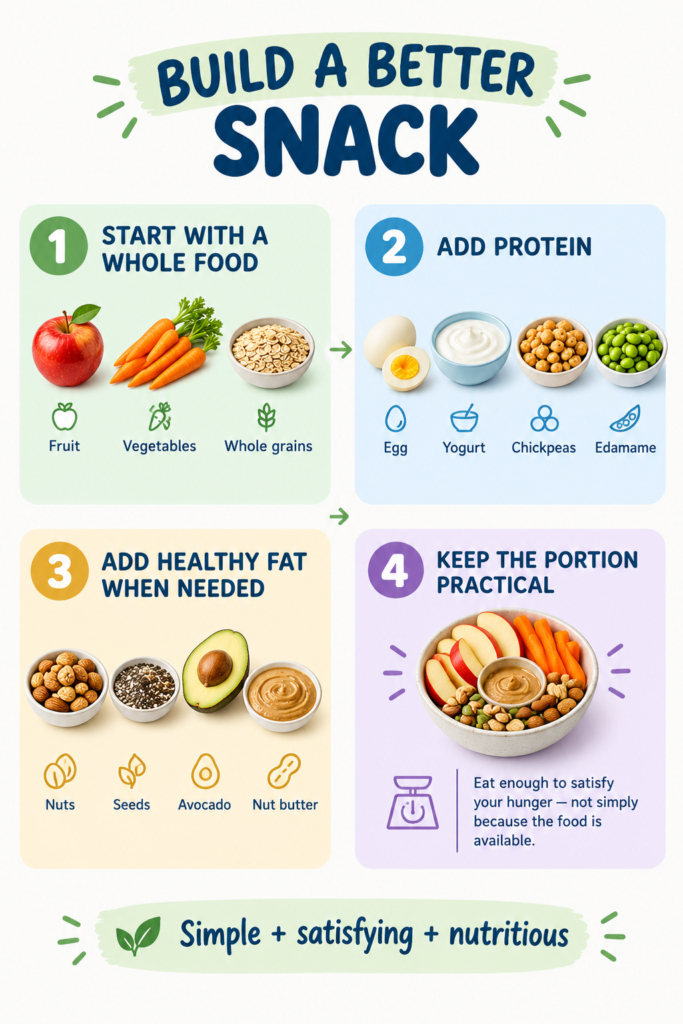
How to Build a More Satisfying Snack
If you’re regularly hungry again 20 minutes after eating a snack, the snack may simply be too small or lacking something that helps you feel satisfied.
A simple formula is:
Protein
- Greek yogurt
- Eggs
- Cottage cheese
- Hummus
- Edamame
- Nuts
Fiber-rich food
- Fruit
- Vegetables
- Oats
- Whole grains
- Beans
Healthy fat when appropriate
- Nuts
- Seeds
- Avocado
- Nut butter
You don’t need all three every time. But combining two or more can turn a very small snack into something more satisfying.
Do You Need a Snack Before Exercise?
It depends on the workout, its duration, when you last ate and your individual needs.
For a short, easy workout, you may not need anything. If you’re hungry before exercising, a simple carbohydrate-rich snack may be useful.
Examples include:
- Banana
- Fruit
- Oatmeal
- Whole-grain toast
For longer or more demanding activity, your nutrition needs may be different. Don’t assume that every workout requires a special protein bar or sports product.
What About Post-Workout Snacks?
After exercise, your next meal may be enough. If your next meal is several hours away, a snack containing protein and carbohydrates can be practical.
Examples:
- Greek yogurt + fruit
- Egg + whole-grain toast
- Milk or fortified soy drink + banana
- Hummus + whole-grain pita
The best option depends on your overall diet and training goals.
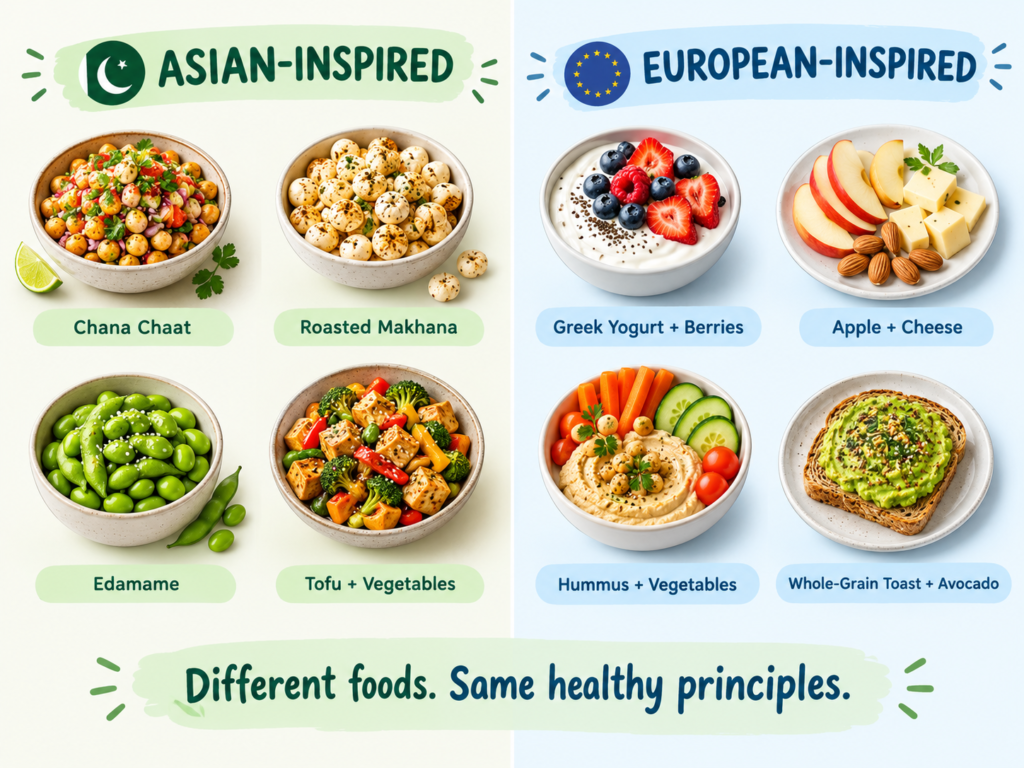
Healthy Snacks From Asian and European Food Cultures
Healthy eating doesn’t have to mean abandoning the foods you grew up with. Many traditional cuisines already include nutritious snack ingredients.
Asian-inspired options
- Chana chaat
- Edamame
- Roasted makhana
- Steamed corn
- Fruit with yogurt
- Tofu and vegetable rolls
- Roasted chickpeas
European-inspired options
- Greek yogurt + berries
- Apple + cheese
- Whole-grain toast + avocado
- Hummus + vegetables
- Cottage cheese + fruit
- Nuts + pear
- Whole-grain crackers + hummus
The important principle is the same:
Choose mostly nutritious foods and make them fit your normal life.
WHO notes that healthy diets can vary according to cultural context, locally available foods and dietary customs.6
How to Prepare Healthy Snacks for the Week
You don’t need to spend your entire Sunday meal-prepping. A few small preparations can make a big difference.
Step 1: Wash fruit
Keep apples, pears, berries and other fruit ready to eat.
Step 2: Prepare vegetables
Slice carrots, cucumbers and peppers and store them in the refrigerator.
Step 3: Cook some eggs
Boiled eggs can be kept ready for quick meals and snacks, provided they are stored safely.
Step 4: Portion nuts
Instead of eating directly from a large bag, divide nuts into small containers.
Step 5: Keep yogurt available
Plain yogurt is one of the easiest bases for a quick snack.
Step 6: Keep one shelf-stable option nearby
Roasted chickpeas, whole-grain crackers or unsalted nuts can work when refrigeration isn’t available. Preparation doesn’t need to be complicated.
Make the healthy option the convenient option.
Common Healthy Snacking Mistakes
Eating directly from the packet
It’s surprisingly easy to lose track of how much you’ve eaten. Put a portion in a bowl instead.
Choosing “healthy” foods that are still heavily sweetened
Granola bars, flavored yogurts and other packaged foods can contain substantial amounts of added sugar. Read the label.
Eating because you’re bored
If you aren’t hungry, try a short break, a glass of water or another activity before automatically reaching for food.
Skipping meals and constantly snacking
Snacks should complement meals rather than replace a balanced eating pattern.
Assuming healthy foods can be eaten without limits
Nuts, cheese, dried fruit, nut butter and granola can all be nutritious, but they can also be energy-dense. Portion size still matters.
A Simple Healthy Snack List to Save
If you want a quick reference, start with these:
For something sweet:
- Apple + peanut butter
- Berries + yogurt
- Banana + walnuts
- Pear + almonds
- Dark chocolate + fruit
For something savory:
- Hummus + vegetables
- Roasted chickpeas
- Edamame
- Popcorn
- Boiled eggs
For more protein:
- Greek yogurt
- Cottage cheese
- Eggs
- Edamame
- Tofu
- Hummus
For more fiber:
- Pears
- Apples
- Berries
- Chia seeds
- Oats
- Chickpeas
- Whole grains
For on-the-go:
- Fruit
- Nuts
- Trail mix
- Roasted chickpeas
- Whole-grain crackers
The Bottom Line
Healthy snacking doesn’t require expensive protein bars, complicated recipes or a completely new diet. Start with foods you already enjoy.
- If you like fruit, keep fruit where you can see it.
- If you enjoy yogurt, keep plain yogurt in the refrigerator.
- If you prefer savory snacks, try hummus, roasted chickpeas or edamame.
- If you’re used to Asian foods, there’s no reason to abandon familiar options such as chana chaat, makhana, tofu or yogurt.
- If you prefer European-style foods, fruit, whole-grain toast, yogurt, hummus, nuts and vegetables can work just as well.
The best healthy snack is often the one that you enjoy, can prepare easily and will actually eat.
You don’t need to snack perfectly. You simply need more nutritious choices available when hunger or cravings arrive.
Frequently Asked Questions About Healthy Snacks
What are the healthiest snacks?
Some nutritious choices include fruit, vegetables with hummus, plain yogurt with berries, nuts, boiled eggs, roasted chickpeas, edamame, oatmeal and whole-grain foods. The best choice depends on your hunger, dietary needs and preferences.
What is a healthy snack for weight management?
Choose a snack that satisfies you without adding excessive amounts of calories to your overall diet. Fruit with yogurt, vegetables with hummus, a small handful of nuts or an egg with vegetables can all be practical choices.
What are good high-protein snacks?
Greek yogurt, cottage cheese, eggs, edamame, tofu, hummus, roasted chickpeas and nuts are useful protein-containing snack options.
What are good high-fiber snacks?
Fruit, vegetables, chickpeas, oats, chia seeds, nuts and whole-grain foods can help increase your fiber intake.
Is fruit a healthy snack?
Yes. Whole fruit provides fiber, vitamins, minerals and naturally occurring sugars. Apples, pears, berries, oranges and bananas are all convenient snack options.
Are nuts healthy snacks?
Nuts provide protein, fiber and mostly unsaturated fats. They’re nutritious but energy-dense, so a small portion is generally enough.
What is a healthy evening snack?
If you’re genuinely hungry in the evening, options such as plain yogurt with berries, fruit with nuts, oatmeal, cottage cheese or vegetables with hummus can work well.
What are healthy snacks for work?
Fruit, nuts, plain yogurt, boiled eggs, roasted chickpeas, hummus with vegetables and whole-grain crackers are practical office options.
What are healthy snacks to take while traveling?
Whole fruit, unsalted nuts, homemade trail mix, roasted chickpeas and suitable whole-grain snacks can be convenient. For perishable foods, use appropriate refrigeration or insulated storage.
Can I eat snacks every day?
Yes, if snacks fit your overall eating pattern and you need or enjoy them. But you don’t have to snack simply because you’ve been told that you should.
Are packaged snacks unhealthy?
Not necessarily. Some packaged foods can be nutritious and convenient. Check the nutrition label and ingredient list rather than judging the food solely by its packaging or marketing.
Are healthy snacks good before exercise?
It depends on the activity and when you last ate. If you’re hungry before exercise, foods such as fruit, banana, oatmeal or whole-grain toast can be practical options.
Should I eat protein after exercise?
Your overall daily protein intake matters more than a strict requirement to eat protein immediately after every workout. A protein-containing snack can be useful when your next meal is still several hours away.
How many snacks should I eat per day?
There is no universal number. Some people need or prefer snacks between meals, while others don’t. Let your hunger, schedule and overall diet guide you.
Medical Disclaimer
This article is intended for general educational purposes and does not replace individualized medical or nutrition advice. People with diabetes, kidney disease, food allergies, eating disorders, digestive conditions or other health concerns may have specific dietary needs. Speak with a qualified healthcare professional or registered dietitian if you need personalized advice.