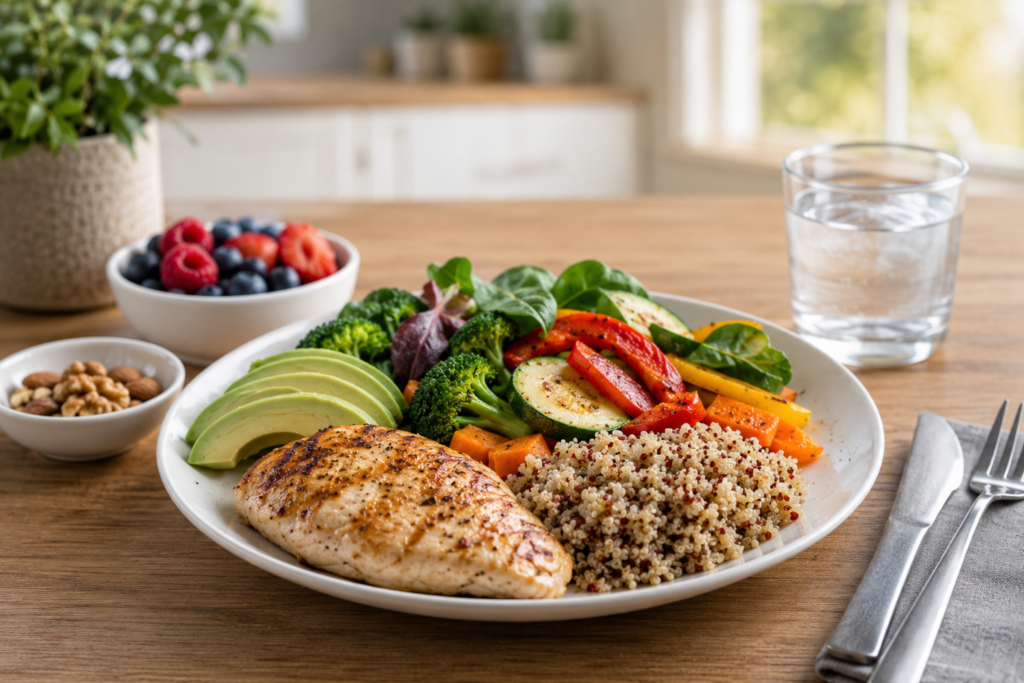
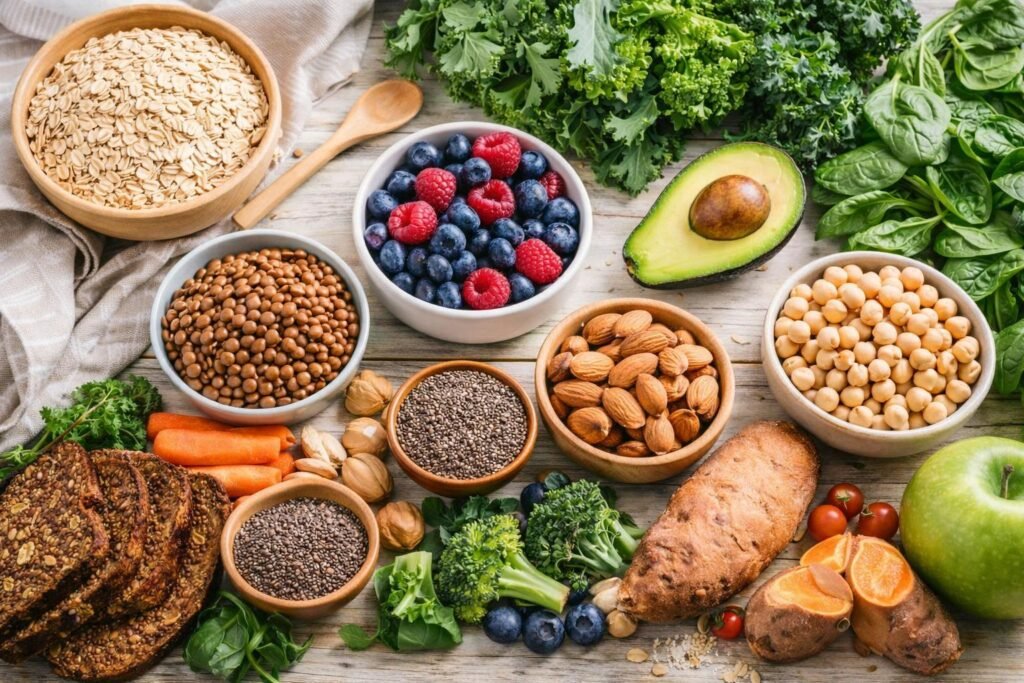
Fiber isn’t usually the first thing people think about when they talk about healthy eating. Protein gets most of the attention. Healthy fats have become popular too. But fiber quietly does a lot of important work in the background.
It supports normal digestion, helps keep bowel movements regular, and can help you feel satisfied after meals. Eating enough fiber is also associated with a lower risk of several chronic diseases, including cardiovascular disease and type 2 diabetes.1
The good news is that you don’t need special products or expensive supplements to get more fiber. It’s found naturally in foods you may already eat:
Lentils. Beans. Oats. Apples. Pears. Vegetables. Whole grains. Nuts. Seeds.
The trick is simply learning how to include more of them in your everyday meals. And that can look very different depending on where you live.
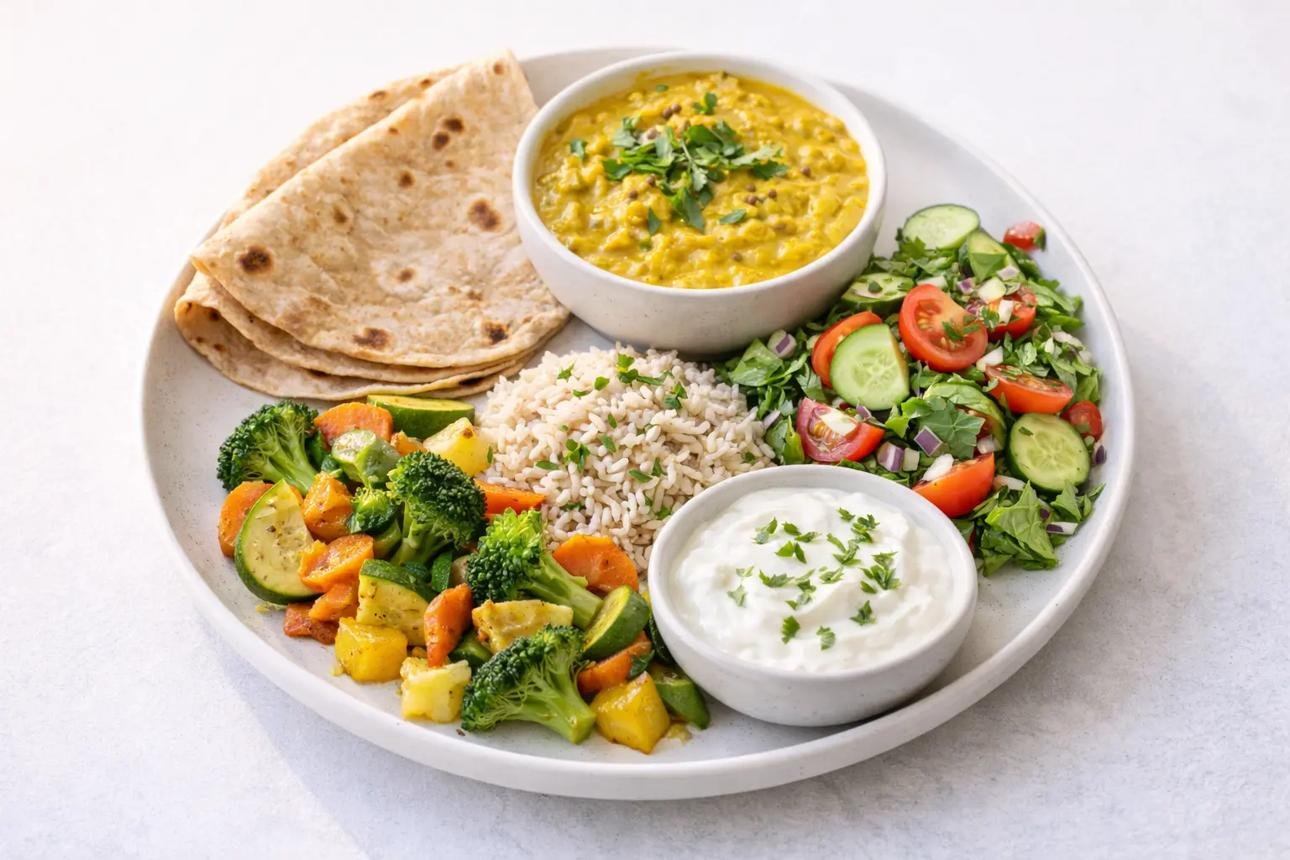
A South Asian meal might include dal, chickpeas, vegetables and whole-wheat roti. A European meal might include oats, berries, lentil soup, whole-grain bread and vegetables.
Different foods, same basic idea: more whole, plant-based foods means more opportunities to get fiber.
[If you want to get more knowledge on balance diet you can check our guide on “What Is a Balanced Diet?”]
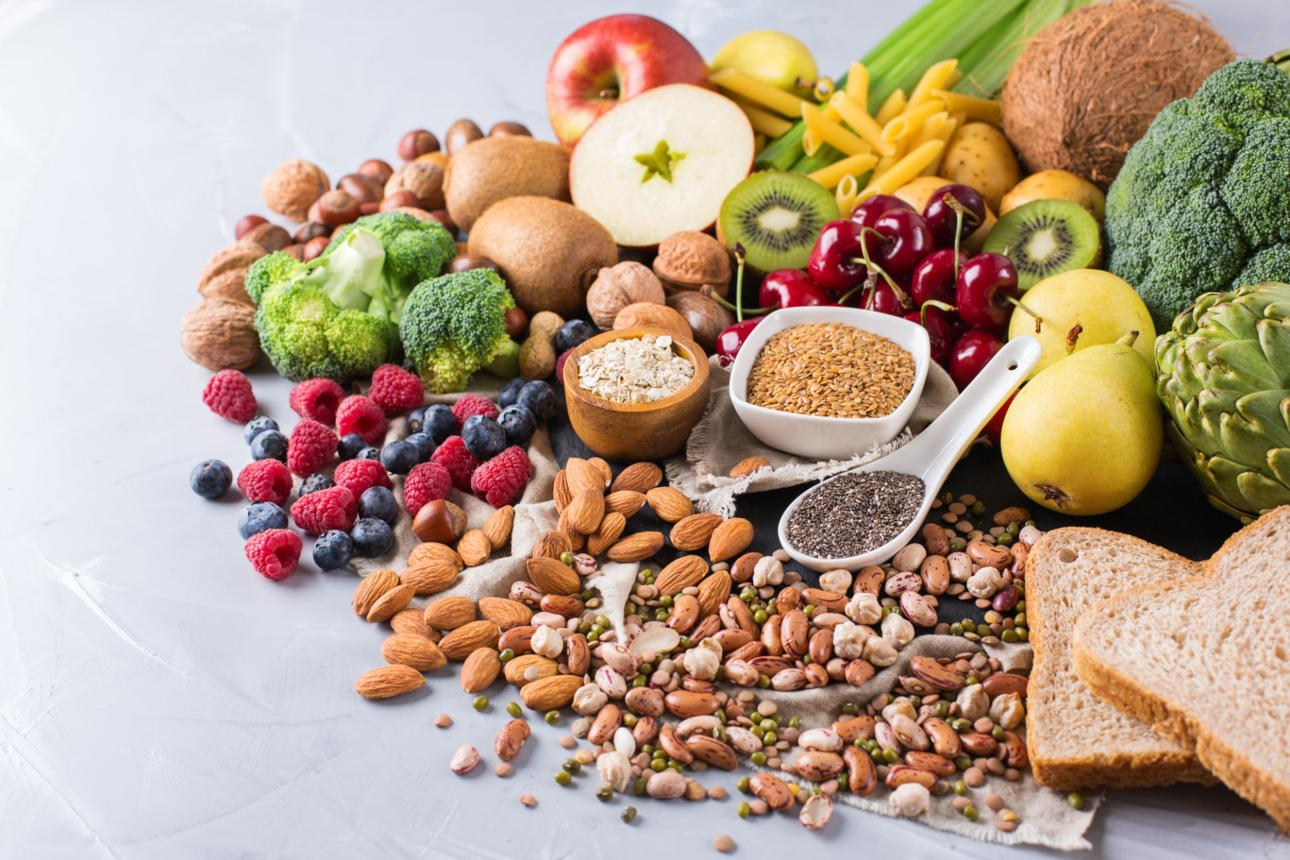
What Is Dietary Fiber?
Dietary fiber is a type of carbohydrate found mainly in plant foods that your body doesn’t fully digest.
Instead of being broken down and absorbed like many other carbohydrates, much of the fiber travels through your digestive system. That might sound like something that isn’t particularly useful. It’s actually one of the reasons fiber matters.
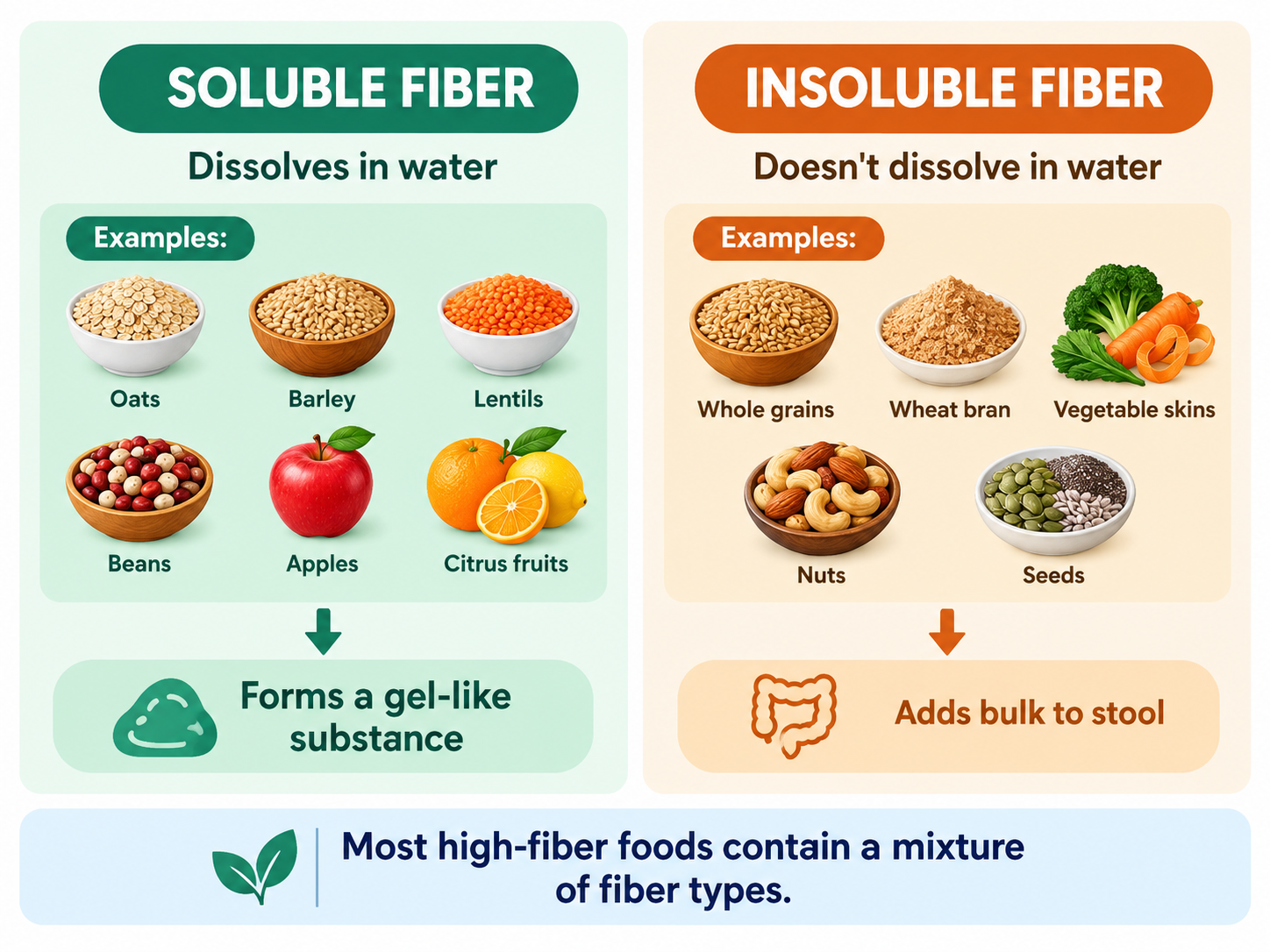
Different types of fiber behave differently in the digestive tract. Some fiber dissolves in water and can form a gel-like substance. Other types add bulk to stool and help food move through the digestive system.
You don’t necessarily need to memorize the scientific definitions. A simpler way to think about it is:
“Fiber is one of the reasons whole plant foods are so useful to your digestive system.“
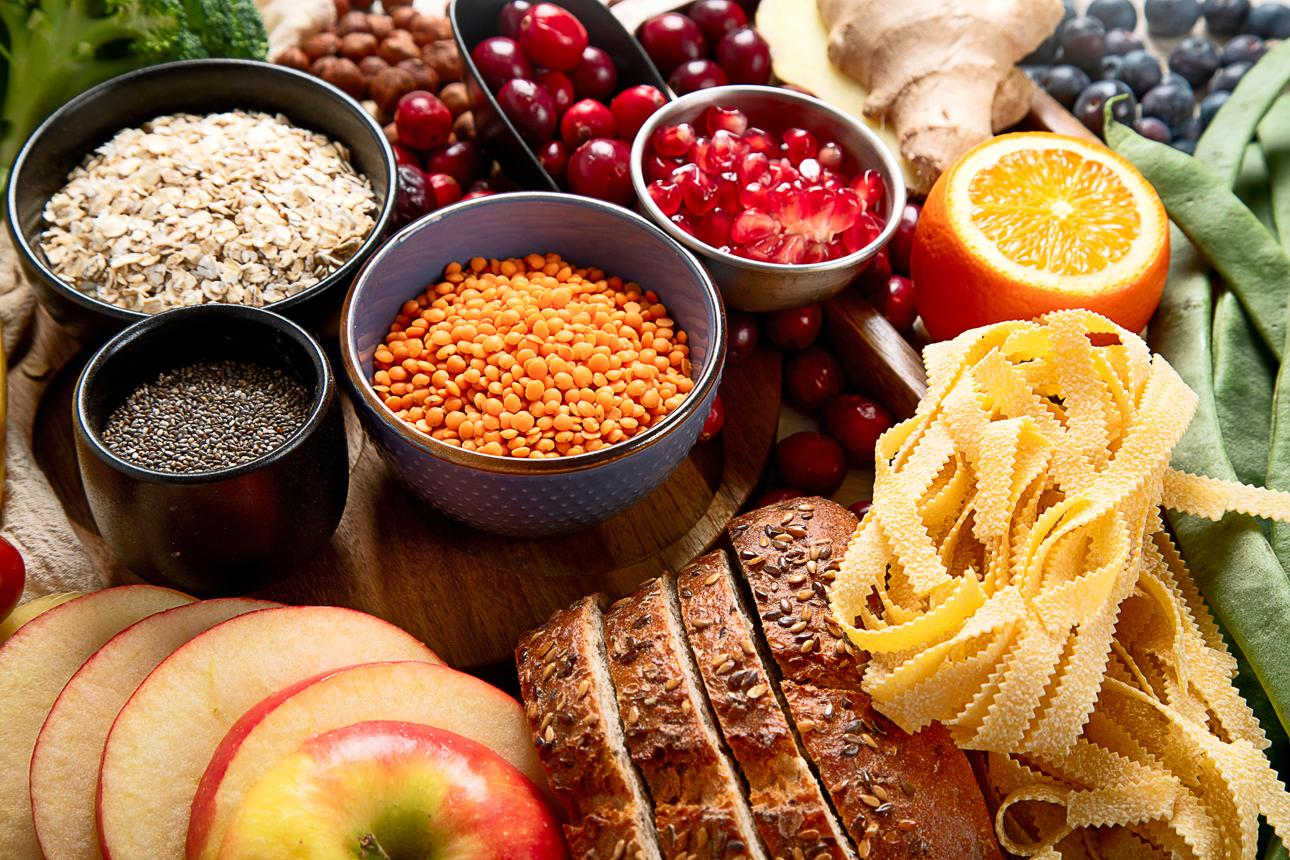
Soluble and Insoluble Fiber: What’s the Difference?
You’ll often hear fiber divided into two categories.2
Soluble fiber
Soluble fiber dissolves in water and can form a gel-like material in the digestive tract.
It’s found in foods such as:
- Oats
- Barley
- Beans
- Lentils
- Apples
- Citrus fruits
- Some vegetables
Soluble fiber is also associated with helping maintain healthy cholesterol and blood glucose levels as part of an overall healthy eating pattern.
Insoluble fiber
Insoluble fiber doesn’t dissolve in water in the same way. It adds bulk to stool and helps support normal bowel movements.
It’s found in foods including:
- Whole grains
- Wheat bran
- Vegetable skins
- Nuts
- Seeds
- Many vegetables
Most high-fiber foods contain a mixture of different types of fiber, so you don’t need to worry about getting exactly the right amount of each.
The easiest approach is to eat a variety of plant foods.
How Much Fiber Do You Need?
Fiber requirements vary depending on age and individual circumstances.
For adults, many dietary guidelines recommend roughly 25–30 grams of fiber per day, although recommendations differ between countries and age groups.
The NHS recommends that adults aim for 30 grams of fiber a day.3
The problem is that many people don’t get that much. That doesn’t mean you should suddenly start eating enormous amounts of bran, beans and raw vegetables tomorrow.
A sudden increase can cause:
- Bloating
- Gas
- Abdominal discomfort
Instead, increase your intake gradually. For example, add an extra serving of vegetables at dinner, switch some refined grains to whole grains, and include beans or lentils a few times each week. Small changes are easier to maintain.
20 High-Fiber Foods to Add to Your Diet
Here are 20 nutritious foods that can help you increase your fiber intake naturally.
The exact fiber content varies depending on the food, variety and serving size, so treat the numbers below as approximate.
Fiber amounts are approximate and can vary depending on the variety, cooking method and serving size. The figures below are provided mainly for comparison rather than as exact values for every portion.
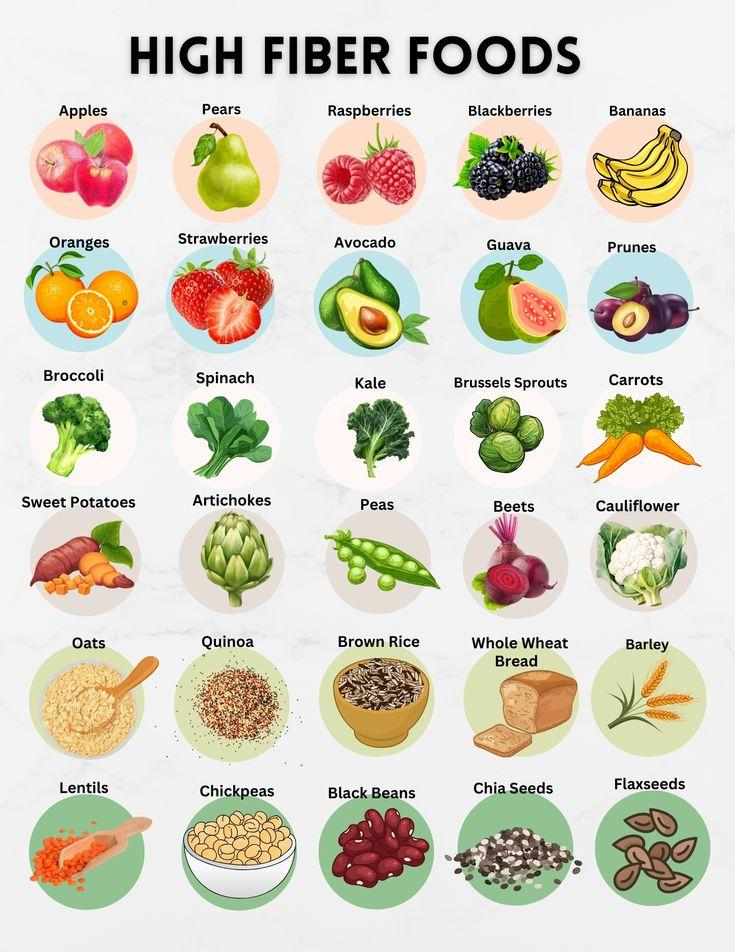
1. Lentils
Lentils are one of the easiest foods to recommend when talking about fiber. They’re affordable, filling and work in everything from traditional curries to soups and salads.
Fiber: roughly 7–8 g per 100 g cooked
They’re also a useful source of plant protein.
Asian-style idea
Make dal with lentils, tomatoes, onions and spices. Serve it with vegetables and whole-wheat roti or rice.
European-style idea
Use lentils in a vegetable soup or combine them with roasted vegetables and whole grains.
[If you want to learn the protien and fibers both in lentils you can read our article about “High-Protein Foods.”]
2. Chickpeas
Chickpeas are another versatile source of fiber. Fiber: roughly 7–8 g per 100 g cooked
You can buy them dried or canned, making them convenient for different budgets and cooking styles.
Asian-style idea
Use chickpeas in chana masala or a simple chickpea and vegetable curry.
European-style idea
Make hummus or add chickpeas to a Mediterranean-style salad. They’re also useful in wraps, soups and grain bowls.
3. Black Beans
Black beans provide both fiber and plant protein. Fiber: roughly 8–9 g per 100 g cooked
Try them in:
- Bean salads
- Soups
- Rice bowls
- Vegetable stews
- Wraps
If you’re increasing your fiber intake, beans are one of the foods worth getting familiar with.
4. Kidney Beans
Kidney beans are particularly familiar in South Asian cooking, where rajma is a popular dish.
Fiber: roughly 6–7 g per 100 g cooked
Asian-style idea
Rajma with rice, vegetables and a side of yogurt can make a satisfying meal.
European-style idea
Add kidney beans to a vegetable stew or mixed-bean salad. If you’re using canned beans, rinsing them can help reduce some of the sodium.
5. Oats
Oats are one of the easiest high-fiber foods to add to breakfast. Fiber: roughly 8–10 g per 100 g dry oats
They contain beta-glucan, a type of soluble fiber that has been studied for its effects on cholesterol.
Asian-style idea
Make oatmeal with milk or a fortified plant-based drink and top it with banana, nuts and seeds.
European-style idea
Try overnight oats with berries, Greek yogurt and chia seeds. A bowl of oats can be a simple starting point if your current breakfast is mostly refined carbohydrates.
6. Barley
Barley doesn’t receive nearly as much attention as oats, but it’s another excellent whole grain. Fiber: roughly 3–4 g per 100 g cooked
It works particularly well in soups and stews.
European-style idea
Add pearl or whole-grain barley to vegetable soup.
Asian-style idea
Use barley as part of a mixed-grain bowl with vegetables and beans. Barley can also replace some of the rice or other grains in a meal.
7. Apples
An apple is one of the simplest high-fiber snacks. Fiber: roughly 2–3 g per medium apple
A significant amount of the fiber is found in or near the skin, so eating the skin when practical gives you more fiber.
Try pairing an apple with:
- Plain yogurt
- Peanut butter
- A small handful of nuts
That combination adds protein and healthy fats alongside the fruit.
8. Pears
Pears are another fruit that can contribute a useful amount of fiber. Fiber: roughly 5–6 g per medium pear
They’re particularly convenient as a snack because you don’t need to prepare them.
Try adding sliced pear to:
- Oatmeal
- Yogurt
- Salads
- Whole-grain toast
9. Raspberries
Berries are an easy way to increase fiber without making a meal feel heavy. Fiber: roughly 6–7 g per 100 g
Raspberries are particularly fiber-rich compared with many other fruits.
European-style idea
Add them to Greek yogurt and oats.
Asian-style idea
Mix them with plain yogurt, nuts and oats for breakfast or a snack. Frozen berries can also be a practical option when fresh berries aren’t available.
10. Avocado
Avocado provides fiber along with mostly unsaturated fats. Fiber: roughly 6–7 g per 100 g
It’s an easy addition to meals.
European-style idea
Add avocado to whole-grain toast with eggs and tomatoes.
Asian-style idea
Add sliced avocado to a rice or tofu bowl with vegetables. You don’t need a large amount. A moderate serving is enough.
11. Green Peas
Peas are often treated as a side dish, but they can contribute both fiber and protein.
Fiber: roughly 5 g per 100 g cooked
Add them to:
- Rice dishes
- Soups
- Curries
- Pasta
- Vegetable stir-fries
They’re also an easy frozen vegetable to keep at home.
12. Broccoli
Broccoli is a simple way to add fiber to lunch or dinner. Fiber: roughly 2–3 g per 100 g
It also provides vitamin C, vitamin K and other nutrients.
Asian-style idea
Stir-fry broccoli with tofu, mushrooms and other vegetables.
European-style idea
Roast broccoli alongside chicken, salmon or potatoes.
13. Carrots
Carrots provide fiber while being inexpensive and easy to store. Fiber: roughly 2–3 g per 100 g
You can eat them raw, roasted, steamed or cooked into soups and curries.
Asian-style idea
Add carrots to vegetable curry, fried rice or stir-fried noodles.
European-style idea
Roast carrots with other root vegetables or add them to soup.
14. Sweet Potatoes
Sweet potatoes provide fiber along with carbohydrates and several vitamins and minerals. Fiber: roughly 3 g per 100 g
Leaving the skin on when appropriate can increase the fiber content.
Asian-style idea
Use roasted sweet potato alongside lentils and vegetables.
European-style idea
Serve roasted sweet potato with fish, chicken or a bean-based meal. They can also be mashed as an alternative to traditional mashed potatoes.
15. Whole-Wheat Bread
Not all bread is equally high in fiber. Whole-wheat or whole-grain bread generally provides more fiber than bread made primarily from refined flour.
Fiber: varies considerably by product
Check the nutrition label rather than assuming a bread is high in fiber because it looks brown.
Asian-style idea
Use whole-wheat bread for an egg or chickpea sandwich.
European-style idea
Pair whole-grain bread with cottage cheese, eggs, vegetables or hummus.
16. Brown Rice
Brown rice is a whole grain because the bran and germ remain intact. Fiber: roughly 1–2 g per 100 g cooked
It isn’t one of the most concentrated sources of fiber on this list, but it can still contribute to your overall intake.
Asian-style idea
Use brown rice with dal, beans, vegetables or tofu.
European-style idea
Serve it as a side with salmon, roasted vegetables or a bean salad.
You don’t have to replace white rice completely. Mixing brown and white rice can be an easy transition.
17. Almonds
Almonds provide fiber, protein and unsaturated fats. Fiber: roughly 12 g per 100 g
Because nuts are energy-dense, you don’t need a huge portion. A small handful can be enough.
Try them:
- With fruit
- In yogurt
- Over oatmeal
- In salads
- As a snack
Choose unsalted nuts when possible.
18. Chia Seeds
Chia seeds are tiny, but they pack a lot of fiber. Fiber: roughly 30–35 g per 100 g
Of course, nobody needs to eat 100 grams of chia seeds. A tablespoon or two is a much more realistic serving.
Add them to:
- Overnight oats
- Yogurt
- Smoothies
- Porridge
- Homemade puddings
Because chia seeds absorb liquid, make sure you consume them with enough fluid.
19. Flaxseeds
Flaxseeds provide fiber and healthy fats, including alpha-linolenic acid, a plant form of omega-3 fatty acid.
Fiber: roughly 27 g per 100 g
Ground flaxseed is often easier to use than whole flaxseed. Try adding a spoonful to oatmeal, yogurt or smoothies.
20. Popcorn
Yes, popcorn can be a source of fiber. Plain air-popped popcorn is a whole-grain food. Fiber: roughly 3–4 g per 3 cups air-popped
The problem isn’t popcorn itself. It’s what often gets added to it.
Large amounts of butter, sugar, caramel or salt can quickly turn a simple snack into a much less balanced choice.
For an everyday snack, keep it relatively simple.
High-Fiber Foods for Breakfast
Breakfast is an easy place to increase fiber. You don’t need to eat a completely different cuisine.
Asian-style breakfast
Try:
Oats + milk or fortified soy drink + banana + nuts
Or:
Whole-wheat roti + vegetables + beans or lentils
European-style breakfast
Try:
Oats + Greek yogurt + berries + chia seeds
Or:
Whole-grain toast + avocado + egg + fruit
Notice the pattern?
You’re combining several foods rather than searching for one magical “fiber food.”
High-Fiber Foods for Lunch
Lunch can be surprisingly easy.
Asian-style
Try:
Dal + brown or mixed-grain rice + vegetables
or:
Chickpea curry + whole-wheat roti + salad
European-style
Try:
Lentil soup + whole-grain bread + salad
or:
Bean and vegetable salad + whole-grain bread
High-Fiber Foods for Dinner
Dinner is another opportunity to add fiber without dramatically increasing the amount of food you eat.
Asian-style
Chicken or tofu stir-fry + vegetables + brown rice
or
Dal + mixed vegetables + roti
or
Fish + vegetables + rice
European-style
Salmon + potatoes + broccoli
or
Chicken + roasted vegetables + whole grains
or
Lentil stew + whole-grain bread
The goal isn’t to make every meal extremely high in fiber. It’s to make fiber-rich foods a normal part of your diet.

How to Increase Fiber Without Feeling Bloated
This is important. If your current diet is low in fiber, suddenly eating huge portions of beans, lentils, vegetables and seeds can leave you feeling uncomfortable.
Your digestive system needs time to adapt. Try these steps instead.
1. Increase fiber gradually
Add one extra fiber-rich food at a time.
For example, start by adding fruit at breakfast.
A few days later, add beans or lentils to lunch.
Then increase your vegetable portions.
2. Drink enough fluids
Fiber works alongside fluid in the digestive system. If you’re increasing fiber significantly, make sure you’re also drinking enough water and other suitable fluids.
3. Don’t suddenly double your portions
A large salad plus beans plus lentils plus chia seeds all in one meal isn’t necessary. Spread your fiber intake throughout the day.
4. Choose cooked vegetables if raw foods bother you
Cooked vegetables may be easier for some people to tolerate.
5. Give your body time
Some gas and bloating can occur when increasing fiber. If symptoms are severe or persistent, speak with a healthcare professional.
Does Fiber Help With Weight Management?
Fiber isn’t a weight-loss supplement. But high-fiber foods can be useful when you’re trying to build a satisfying diet. Many high-fiber foods require chewing and can help meals feel more substantial.
For example:
White bread + sweetened drink
is very different from:
Whole-grain bread + eggs + vegetables + fruit
The second meal provides a broader combination of nutrients and generally more fiber.
Beans, lentils, vegetables, fruits and whole grains can all fit comfortably into a diet designed for healthy weight management.
The bigger picture matters more than one nutrient.
Can Fiber Help Digestion?
Yes, fiber plays an important role in normal digestive health. Certain types of fiber add bulk to stool, while other types are fermented by bacteria in the large intestine.
A varied diet containing fruits, vegetables, whole grains, beans and other plant foods supports a healthy digestive pattern.
If you’re currently eating very little fiber, don’t interpret that as a reason to suddenly eat huge quantities.
Gradual changes usually make more sense.
The NHS (National Health Services) specifically recommends increasing fiber gradually and drinking plenty of fluids when increasing fiber intake.
Can a High-Fiber Diet Reduce Cancer Risk?
There is good reason to include plenty of fiber-rich plant foods in your diet, and cancer prevention is one of them.
Research has found an association between higher dietary fiber intake and a lower risk of colorectal cancer. The World Health Organization and the International Agency for Research on Cancer (IARC) include whole grains, vegetables, fruits and legumes among the foods that can contribute to a healthier dietary pattern.
However, it’s important not to oversimplify this.
Eating a high-fiber diet doesn’t mean you cannot develop cancer, and fiber isn’t a treatment for cancer. Cancer risk is influenced by many factors, including genetics, age, physical activity, body weight, alcohol consumption, smoking and overall diet.
The practical takeaway is much simpler:
Make fiber-rich plant foods a regular part of your diet.
That means eating more foods such as:
- Lentils and beans
- Whole grains
- Fruits
- Vegetables
- Nuts and seeds
You don’t need to eat a “perfect” diet or rely on one particular food. A varied diet built around minimally processed plant foods is a more realistic long-term approach.
IARC’s evidence review has found that dietary fiber and whole grains are associated with a lower risk of colorectal cancer. This is one reason why regularly choosing whole grains, legumes, fruits and vegetables can be a useful part of a healthy eating pattern.4
Important: Fiber-rich foods should be viewed as one part of an overall healthy lifestyle, not as a way to prevent or treat cancer on their own.
What About Fiber Supplements?
Fiber supplements can be useful in certain situations, but they’re not the first solution for everyone.
For most people, getting fiber from a variety of foods has an important advantage: those foods also provide vitamins, minerals and other beneficial compounds.
For example,
- Eating an apple gives you more than fiber. (additional vitamins)
- Eating lentils gives you more than fiber. (additional Protein)
- Eating oats gives you more than fiber.
That’s why whole foods should generally be the starting point.
If you’re considering a fiber supplement because of persistent constipation or another digestive problem, speak with a healthcare professional rather than trying to solve the problem yourself indefinitely.
Common Mistakes When Increasing Fiber
Eating only one type of high-fiber food
Eating oats every morning doesn’t mean you have a fiber-rich diet. Variety matters.
Rotate between:
- Fruits
- Vegetables
- Beans
- Lentils
- Whole grains
- Nuts
- Seeds
Increasing fiber too quickly
More isn’t always better immediately. Give your digestive system time to adjust.
Forgetting about fluids
Fiber and fluids work together. Don’t dramatically increase fiber while ignoring hydration.
Assuming brown food is whole grain
A brown-looking bread isn’t necessarily whole-grain bread. Check the ingredients and nutrition label.
Thinking fruit juice is the same as whole fruit
Whole fruit contains fiber, while fruit juice generally contains little or no fiber compared with the original fruit. When possible, choose the whole fruit.
Relying on “high-fiber” packaged foods
A cereal bar may contain added fiber but still be highly processed or high in added sugar. Look at the entire nutrition label.
Asian and European High-Fiber Eating: What Can We Learn?
It’s easy to think healthy eating requires following a particular “diet.” It doesn’t. Traditional foods from different cultures can provide plenty of fiber.
Asian-style foods
Many Asian cuisines already include foods such as:
- Lentils
- Beans
- Chickpeas
- Vegetables
- Whole grains
- Soy
- Fruit
- Nuts
- Seeds
A traditional dal-based meal, for example, can naturally contain both fiber and plant protein.
European-style foods
European cuisines also offer plenty of options:
- Oats
- Barley
- Whole-grain bread
- Lentil soup
- Beans
- Peas
- Berries
- Apples
- Pears
- Vegetables
- Nuts and seeds
Mediterranean-style eating patterns are particularly rich in vegetables, legumes, fruits, whole grains and nuts. The lesson isn’t that one region eats “better” than another.
It’s that most food cultures have nutritious, fiber-rich foods that can be built into everyday meals.
A Simple High-Fiber Day
If you’re wondering what this actually looks like, here’s one example.
Breakfast
Oatmeal + banana + chia seeds + nuts
Lunch
Dal + brown or mixed-grain rice + vegetables
Snack
Apple + a small handful of almonds
Dinner
Grilled fish or tofu + roasted vegetables + whole grains
Optional evening snack
Plain yogurt + berries
This isn’t a prescription or a perfect diet. It’s simply an example of how several ordinary foods can add up throughout the day.
The Bottom Line
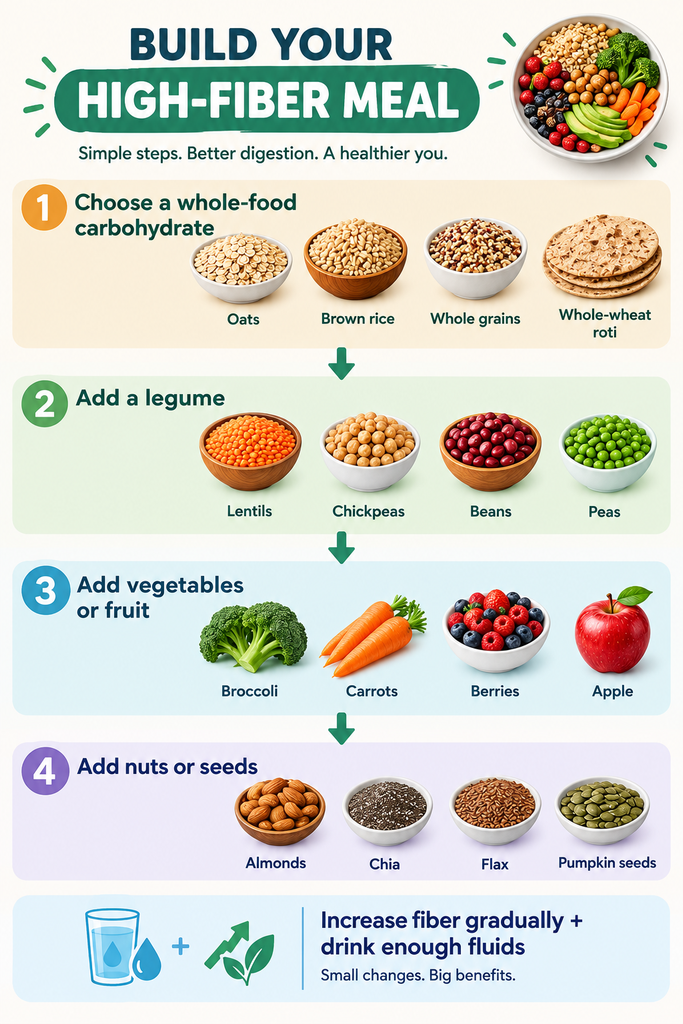
You don’t need to become obsessed with counting every gram of fiber. Instead, make a few simple changes.
- Eat more vegetables.
- Choose whole fruits more often.
- Add beans or lentils to meals.
- Try whole grains.
- Keep nuts and seeds around for easy additions.
- Increase your fiber intake gradually if you’re currently eating very little.
Whether your favorite meal is dal and roti or lentil soup and whole-grain bread, you can build a fiber-rich diet around foods that already make sense in your culture and routine.
The goal isn’t perfection. It’s making fiber-rich foods a normal part of everyday eating.
Read our guide on “High-Protein Foods”
Frequently Asked Questions About High-Fiber Foods
What are the best high-fiber foods?
Some of the best sources include lentils, beans, chickpeas, oats, barley, berries, pears, apples, vegetables, whole grains, nuts and seeds.
Which foods are highest in fiber?
Legumes such as lentils and beans, seeds such as chia and flaxseed, and some fruits and whole grains are particularly rich in fiber. The amount depends on the serving size and specific food.
How much fiber should I eat each day?
Recommendations vary by age and country. The NHS recommends that adults aim for about 30 grams of fiber per day.
Are fruits high in fiber?
Many whole fruits provide useful amounts of fiber. Apples, pears and berries are particularly good choices. Eating whole fruit is generally a better way to get fiber than drinking fruit juice.
Are lentils high in fiber?
Yes. Lentils are a good source of both dietary fiber and plant protein, making them particularly useful in vegetarian and plant-forward meals.
Is rice high in fiber?
It depends on the type. Brown rice and other whole-grain varieties contain more fiber than refined white rice. You can gradually replace some white rice with brown or mixed grains if you enjoy them.
Is oatmeal high in fiber?
Yes. Oats provide dietary fiber, including beta-glucan, a soluble fiber. Oatmeal can be an easy way to add fiber to breakfast.
Can high-fiber foods help with constipation?
Fiber can help support normal bowel movements, particularly when combined with adequate fluid intake. However, persistent or severe constipation should be discussed with a healthcare professional.
Can eating too much fiber cause gas?
Yes. Increasing fiber very quickly can cause gas, bloating or abdominal discomfort in some people. Increasing fiber gradually can make the transition easier.
Should I take a fiber supplement?
Not necessarily. Many people can meet their fiber needs through a varied diet containing vegetables, fruits, legumes, whole grains, nuts and seeds. Supplements may be useful in some circumstances, but it’s worth discussing persistent digestive symptoms with a healthcare professional.
Are high-fiber foods good for weight loss?
High-fiber foods can help create satisfying meals and can be useful as part of a healthy weight-management diet. However, fiber itself isn’t a weight-loss treatment.
Can I get enough fiber from Asian foods?
Absolutely. Lentils, chickpeas, beans, vegetables, fruits, whole grains, nuts and seeds are common in many Asian cuisines and can all contribute fiber.
Can I get enough fiber from European foods?
Yes. Oats, barley, whole-grain bread, beans, lentils, vegetables, berries, apples, pears, nuts and seeds are all useful options.
Medical Disclaimer
This article is for general educational purposes and isn’t intended to replace individualized medical or nutrition advice. If you have persistent digestive symptoms, unexplained changes in bowel habits, or a medical condition that affects your diet, speak with a qualified healthcare professional.
- https://www.nhs.uk/live-well/eat-well/digestive-health/how-to-get-more-fibre-into-your-diet ↩︎
- https://nutritionsource.hsph.harvard.edu/carbohydrates/fiber/ ↩︎
- https://www.nhs.uk/live-well/eat-well/digestive-health/how-to-get-more-fibre-into-your-diet ↩︎
- https://www.iarc.who.int/reference/european-code-against-cancer-4th-edition-diet-and-cancer ↩︎