
Have you ever wondered what people actually mean when they say “eat a balanced diet”?
It sounds simple, but it can be surprisingly confusing. Does it mean giving up rice or roti? Eating salads every day? Counting calories? Avoiding sugar completely? Or following a strict meal plan? The good news is that a balanced diet doesn’t have to be complicated.
At its simplest, it means giving your body a good variety of nutrients from different foods, rather than relying too heavily on one type of food. Your meals should provide carbohydrates for energy, protein for growth and repair, healthy fats, vitamins, minerals, fiber and enough fluids.
It also means paying attention to the foods you eat less often. Foods and drinks that are high in free sugars, salt, saturated fat or trans fat don’t necessarily have to disappear from your life, but they shouldn’t make up most of your diet.
The exact foods that make up a balanced diet will look different from one person to another. A meal that works well for an active teenager may not be appropriate for an older adult, and traditional foods can fit perfectly well into healthy eating.
The World Health Organization describes a healthy diet around four basic ideas: adequacy, balance, moderation and diversity.
If you’re just starting to improve your eating habits, you may also want to read our guide on [What Is Healthy Eating?], which explains the bigger picture behind healthy food choices.
Key Takeaways
- A balanced diet includes a variety of foods rather than focusing on one “perfect” food.
- Your body needs carbohydrates, protein, fats, vitamins, minerals, fiber and water.
- Vegetables, fruits, whole grains, pulses, nuts, seeds and nutritious protein sources should have an important place in your diet.
- You don’t have to completely eliminate carbohydrates, fats or foods you enjoy.
- Try to limit foods and drinks that are high in free sugars, excess sodium, saturated fat and trans fat.
- A balanced meal can be as simple as protein + a high-fiber carbohydrate + vegetables or fruit + a healthy fat.
- You don’t need to eat perfectly at every meal. Your overall eating pattern matters more.
- A healthy diet can look different depending on your culture, budget, preferences, age and individual nutritional needs.
What Is a Balanced Diet?
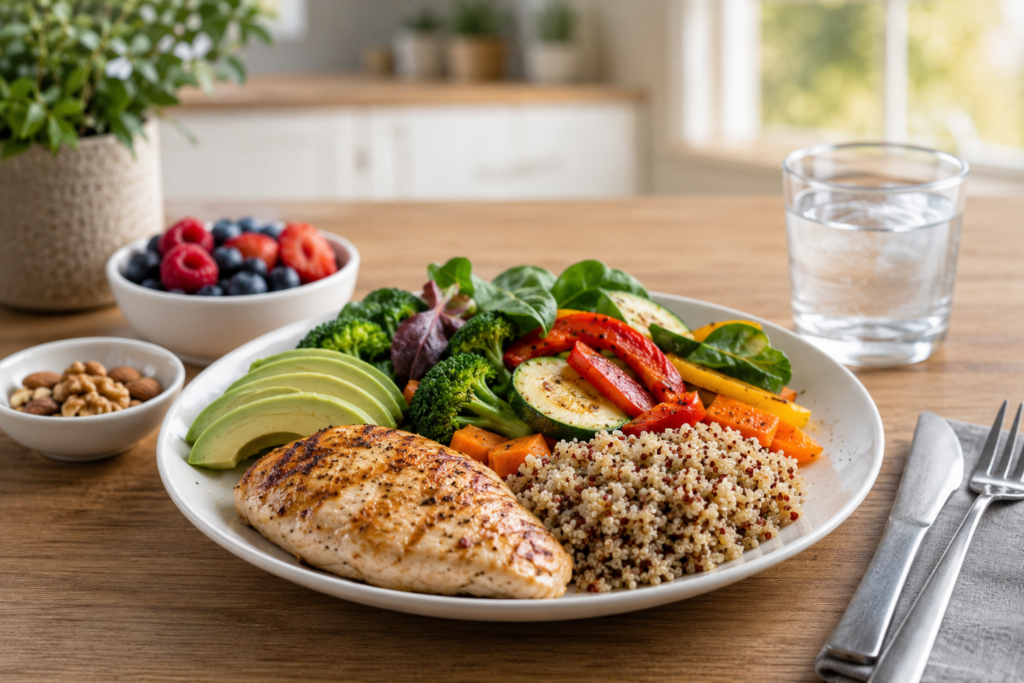
A balanced diet is an eating pattern that gives your body the nutrients and energy it needs while including a sensible variety of different foods.
Think of it less as a strict list of foods you’re “allowed” to eat and more as a way of putting meals together. For example, imagine you’re having lunch.
A plate of plain white rice by itself will give you carbohydrates and energy, but it doesn’t provide much variety. Now add lentils, some cooked vegetables, a salad and yogurt.
Suddenly, you’ve got carbohydrates, protein, fiber, vitamins, minerals and other nutrients coming from several different foods. That’s the basic idea behind balanced eating.
Does every meal have to be perfectly balanced?
No. This is one of the most important things to understand. You don’t need to calculate the exact amount of protein, carbohydrates and fat on your plate every time you eat.
Maybe breakfast is small because you’re not very hungry. Perhaps lunch is your biggest meal of the day. Maybe you have a family dinner where you eat something less nutritious than usual.
That’s normal. What matters is what your overall diet looks like over time. The NHS (National Health Service) also notes that balance doesn’t have to be achieved at every individual meal.
Why Is a Balanced Diet Important?
Your body is doing something every second of the day. Your heart is beating. Your brain is working. Your muscles are moving. Your immune system is constantly responding to potential threats. Your body is repairing cells and producing hormones and enzymes.
All of these processes depend on nutrients. Food provides the raw materials your body needs to keep doing its job. A varied, nutritious eating pattern can help you meet your nutritional needs and is associated with a lower risk of several diet-related chronic diseases, including cardiovascular disease, diabetes and some cancers.
A balanced diet can support:
1. Energy
Carbohydrates, fats and protein all provide energy. That doesn’t mean you should avoid one of them simply because you’ve heard that another nutrient is “better.” Your body uses all three in different ways.
2. Muscle and tissue maintenance
Protein supplies amino acids that your body uses to build and repair tissues. You can get protein from eggs, fish, chicken, dairy products, beans, lentils, chickpeas, soy foods, nuts and seeds.
3. Digestion
Fiber is especially important for a healthy digestive system. It is found naturally in foods such as fruits, vegetables, whole grains, beans, lentils, nuts and seeds.
WHO recommends that adults and children over 10 consume at least 25 grams of naturally occurring dietary fiber per day.
4. Vitamins and minerals
Different foods provide different micronutrients. That’s one reason variety matters.
Eating an apple every day is perfectly fine, but apples shouldn’t be your only fruit. Similarly, spinach is nutritious, but eating spinach doesn’t replace the need for other vegetables.
5. Long-term health
Diet is only one part of health, but it matters. Eating patterns that emphasize nutritious foods while limiting excessive amounts of free sugars, sodium and unhealthy fats can contribute to better long-term health.
What Are the Main Components of a Balanced Diet?
You may see nutrition guides divide food into different groups. The names and exact groupings can vary, but the important nutrients remain broadly the same.
1. Carbohydrates
Carbohydrates often get a bad reputation, especially when people are talking about weight loss. But carbohydrates are an important source of energy. The bigger question is which carbohydrates you’re eating.
Good choices can include:
- Oats
- Whole-wheat roti
- Whole-grain bread
- Brown rice
- Barley
- Corn
- Potatoes
- Sweet potatoes
- Beans
- Lentils
- Chickpeas
- Fruits
- Vegetables
Whole grains, fruits, vegetables and pulses provide carbohydrates along with fiber and other nutrients. WHO recommends getting carbohydrates primarily from these types of foods.
So no, eating rice or roti doesn’t automatically make your diet unhealthy. The bigger picture matters.
2. Protein
Protein helps your body build and repair tissues and plays many other important roles. Some easy protein sources include:
- Eggs
- Fish
- Chicken
- Lean meat
- Milk
- Yogurt
- Lentils
- Beans
- Chickpeas
- Soy foods
- Nuts
- Seeds
You don’t have to eat meat to get enough protein. Plant foods can make a valuable contribution too. For a more detailed list, see our guide to [High-Protein Foods].
3. Healthy Fats
Your body needs fat. The idea that all dietary fat is bad is outdated.
Fat helps your body absorb certain vitamins and provides essential fatty acids.
Foods rich in unsaturated fats include:
- Nuts
- Seeds
- Avocado
- Fish
- Olive oil
- Canola oil
- Sunflower oil
- Soybean oil
On the other hand, saturated fats should generally be limited, while industrially produced trans fats should be avoided. The goal isn’t to make your diet fat-free. It’s to choose better sources of fat and sensible portions.
4. Fruits and Vegetables
If there’s one thing most people could improve about their diet, eating a greater variety of fruits and vegetables would be a good place to start.
Think beyond just “eat an apple.” Try different colors and types:
Vegetables
- Spinach
- Carrots
- Tomatoes
- Broccoli
- Cauliflower
- Peppers
- Cucumbers
- Okra
- Eggplant
- Peas
Fruits
- Apples
- Bananas
- Oranges
- Guava
- Mango
- Papaya
- Berries
- Melons
- Pears
WHO recommends at least 400 grams of fruits and vegetables per day for adults and children over 10.
Fresh is great, but frozen and canned produce can also be useful. If you’re buying canned foods, check the label for excessive added sugar or sodium.
5. Fiber
Fiber is found in plant foods and is an important part of a healthy eating pattern.
Good sources include:
- Lentils
- Beans
- Chickpeas
- Oats
- Barley
- Whole-wheat foods
- Apples
- Pears
- Berries
- Vegetables
- Nuts
- Seeds
If you’re currently eating very little fiber, don’t suddenly double your intake overnight. Increase it gradually and make sure you’re drinking enough fluids.
You can learn more in our dedicated guide to [High-Fiber Foods].
6. Vitamins and Minerals
You don’t need huge amounts of vitamins and minerals, but your body does need them.
For example:
- Calcium helps maintain healthy bones and teeth.
- Iron is needed for normal oxygen transport.
- Potassium supports normal nerve and muscle function.
- Vitamin C supports normal immune function and helps the body absorb iron.
- Vitamin A is important for normal vision and immune function.
- Folate is important for cell division and growth.
- Vitamin B12 supports normal red blood cell formation and nervous system function.
The easiest way to get a broad range of these nutrients is to eat a varied diet. Some people do need supplements, however, especially when there is a diagnosed deficiency or a specific medical or dietary need.
What Foods Are Included in a Balanced Diet?
There isn’t one magical shopping list. Instead, think about having a mix of food groups available in your kitchen.
Whole grains and high-fiber carbohydrates
Examples include:
- Oats
- Whole-wheat flour
- Whole-wheat roti
- Brown rice
- Barley
- Whole-grain bread
- Potatoes
- Sweet potatoes
Vegetables
Include a mixture of leafy greens, cruciferous vegetables, root vegetables and other colorful produce.
Fruits
Whole fruits are an easy way to add vitamins, minerals and fiber to your diet.
Pulses
Lentils, beans and chickpeas are affordable and versatile foods that provide both protein and fiber.
Protein-rich foods
Eggs, fish, chicken, lean meat, dairy, beans, lentils, soy, nuts and seeds can all contribute protein.
Dairy and alternatives
Milk, yogurt, cheese and suitable fortified alternatives can provide nutrients such as calcium and protein.
Healthy fats
Nuts, seeds, avocado, oily fish and unsaturated plant oils can provide beneficial fats. There is plenty of flexibility here.
A balanced diet in Pakistan may look different from one in Japan, Mexico or the United Kingdom—and that’s perfectly fine. Healthy eating doesn’t require abandoning your traditional foods.
How Much of Each Food Group Should You Eat?
This is where nutrition advice can become unnecessarily complicated.
There isn’t one portion size that is right for everyone.
Your needs depend on things such as:
- Age
- Body size
- Physical activity
- Sex
- Life stage
- Pregnancy or breastfeeding
- Health conditions
- Personal dietary needs
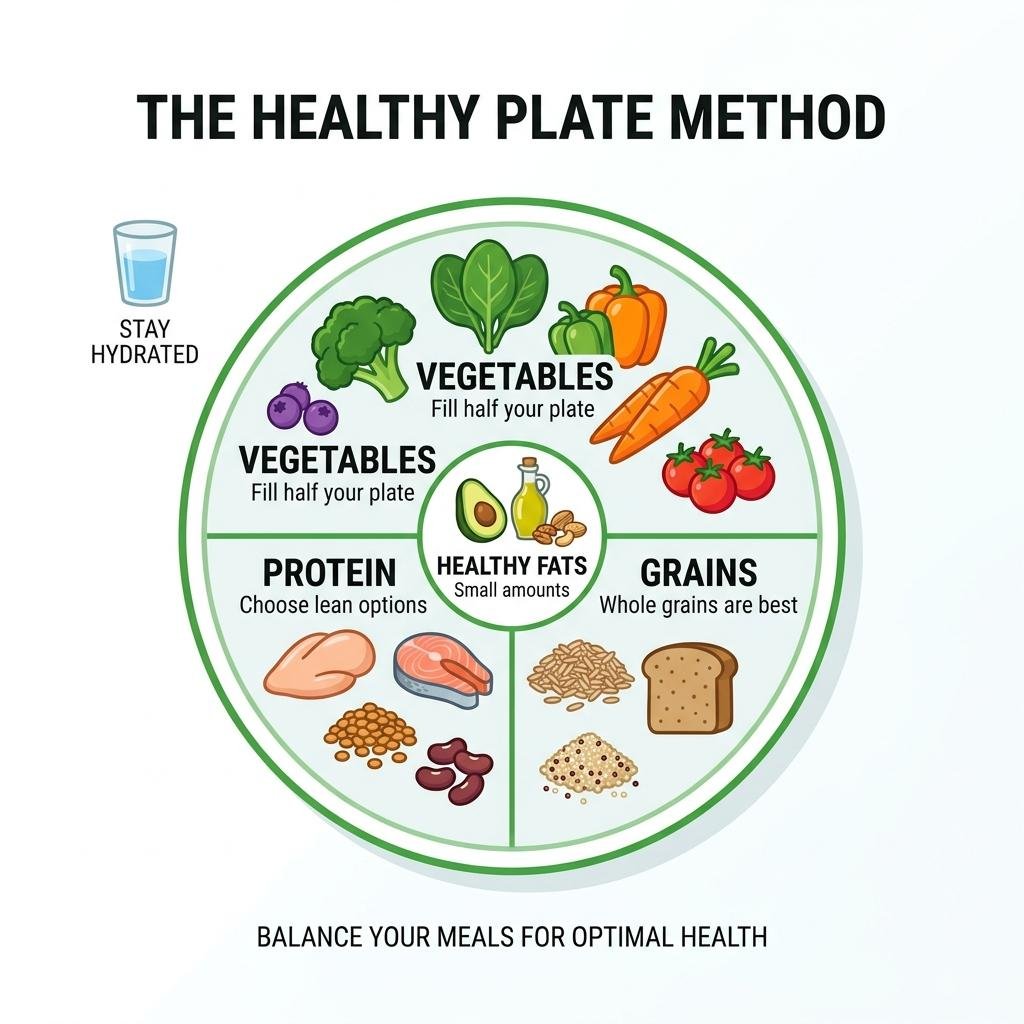
Instead of obsessing over exact numbers, start by looking at the composition of your meals. A useful approach is: Vegetables and fruit + protein + high-fiber carbohydrate + a small amount of healthy fat
For example:
Breakfast: Oats + yogurt + banana + nuts
Lunch: Whole-wheat roti + lentils + vegetables + yogurt
Dinner: Fish + rice + vegetables + salad
Snack: Fruit + a small handful of nuts
These aren’t prescriptions. They’re simply examples of how different foods can work together.
What Does a Balanced Meal Look Like?
Imagine dividing your plate into sections.
A practical approach is to make a substantial portion of the meal vegetables and/or fruit, then include a protein source and a high-fiber carbohydrate.
For example:
Chicken meal
- Grilled chicken
- Brown rice
- Mixed vegetables
- Salad
- A small amount of unsaturated oil
Vegetarian meal
- Lentils or chickpeas
- Whole-wheat roti
- Mixed vegetables
- Plain yogurt
- Fresh fruit
Breakfast
- Eggs
- Whole-wheat toast or roti
- Vegetables
- Fruit
Again, don’t treat these proportions like mathematical rules.
They’re simply a visual way to make sure your meal isn’t dominated by one food group.
Balanced Diet Examples for Everyday Meals
Breakfast
- Oatmeal bowl
Oats + milk or yogurt + banana + nuts or seeds.
- Egg breakfast
Eggs + whole-wheat roti + tomatoes or other vegetables + fruit.
- Yogurt bowl
Plain yogurt + fruit + oats + seeds.
Lunch
- Lentil meal
Lentils + whole-wheat roti + cooked vegetables + salad + yogurt.
- Chicken meal
Grilled chicken + rice + vegetables + salad.
- Chickpea meal
Chickpeas + whole-grain bread or roti + vegetables + yogurt.
Dinner
- Fish dinner
Fish + rice or roti + mixed vegetables + salad.
- Chicken dinner
Chicken + roti + vegetable curry + salad.
- Plant-based dinner
Beans or lentils + rice or roti + vegetables.
Snacks
Instead of automatically reaching for chips, cookies or sweets, try options such as:
- Fruit
- Plain yogurt
- Nuts
- Seeds
- Roasted chickpeas
- Boiled eggs
- Fresh vegetables
- Whole-grain foods
For more ideas, see our upcoming [Healthy Snacks] guide.
How to Build a Balanced Diet on a Budget
Healthy eating doesn’t have to mean buying expensive “superfoods.” Some of the most useful foods in a balanced diet are everyday staples.
Make pulses part of your routine
Lentils, beans and chickpeas can provide protein and fiber without requiring expensive ingredients.
Buy seasonal produce
Seasonal fruits and vegetables are often more affordable and give you an easy way to add variety.
Plan before you shop
Spend a few minutes deciding what you’ll eat during the week. You’ll be less likely to buy random foods simply because you’re hungry at the grocery store.
Don’t overlook frozen and canned foods
Frozen vegetables can be convenient and nutritious. Canned beans and vegetables can also be useful. Check labels for excessive sodium or added sugar.
Cook more often at home
Cooking at home makes it easier to control how much salt, sugar and added fat goes into your food. And remember: healthy eating should fit your real life and budget. If a diet is so expensive or complicated that you can’t maintain it, it isn’t a very practical eating plan.
Common Mistakes That Can Make a Diet Unbalanced
Sometimes people try so hard to “eat healthy” that they create unnecessary restrictions.
Cutting out all carbohydrates
There’s usually no need to eliminate carbohydrates completely. Whole grains, fruits, vegetables and pulses can be valuable parts of a nutritious diet.
Thinking all fats are bad
Your body needs fat. The focus should be on choosing healthier sources more often and limiting unhealthy fats.
Eating the same “healthy” foods every day
Variety matters. Broccoli is healthy. So are carrots, spinach, tomatoes, peppers and many other vegetables. You don’t need to choose just one.
Focusing only on calories
Two meals can contain similar calories but provide very different amounts of protein, fiber, vitamins and minerals. Calories are only one part of nutrition.
Drinking lots of sugary beverages
Soft drinks and other sugary drinks can add substantial amounts of free sugar without offering the nutritional value of whole foods.
Assuming healthy foods can be eaten without limits
Nuts, oils, seeds and dried fruits can all be nutritious, but they’re also relatively energy-dense. Healthy doesn’t mean unlimited.
Is a Balanced Diet the Same as a Healthy Diet?
The terms are closely connected.
A balanced diet focuses on getting an appropriate variety and proportion of nutrients and foods.
Healthy eating is a broader idea that also includes food quality, moderation, diversity and the overall pattern of what you eat.
WHO describes healthy diets using the principles of adequacy, balance, moderation and diversity. In everyday conversation, you’ll often hear “balanced diet” and “healthy diet” used almost interchangeably.
The important thing is the overall eating pattern—not which label you use.
How Can You Start Eating a More Balanced Diet?
Don’t try to completely rebuild your diet tomorrow. Start with one or two changes.
This week, you could:
- Add a vegetable to lunch or dinner.
- Replace one refined grain with a whole-grain option.
- Include a protein source with breakfast.
- Eat a piece of whole fruit instead of drinking fruit juice.
- Add beans, lentils or chickpeas to a meal.
- Keep nuts or fruit available for snacks.
- Drink water more often instead of sugary drinks.
- Experiment with one new vegetable each week.
- Plan a few meals before going grocery shopping.
- Stop thinking that one “unhealthy” meal ruins your entire diet.
That last point is worth remembering.
One meal doesn’t make your diet healthy, and one meal doesn’t make it unhealthy.
Your habits over weeks and months matter much more.
Frequently Asked Questions
What is a balanced diet in simple words?
A balanced diet means eating a variety of foods that provide the nutrients and energy your body needs. It includes foods such as vegetables, fruits, whole grains, protein-rich foods and healthy sources of fat while limiting excessive amounts of sugar, sodium and unhealthy fats.
What are the main components of a balanced diet?
The main components include carbohydrates, protein, fats, vitamins, minerals, fiber and water. A balanced eating pattern gets these nutrients from a variety of foods rather than relying heavily on one food.
What foods are included in a balanced diet?
A balanced diet can include vegetables, fruits, whole grains, potatoes and other nutritious carbohydrates, beans, lentils, eggs, fish, poultry, lean meats, dairy or suitable alternatives, nuts, seeds and unsaturated oils.
Can I eat rice and still have a balanced diet?
Yes. Rice can absolutely be part of a balanced diet. Pairing it with vegetables and a protein source such as lentils, beans, fish, chicken or eggs makes the meal more varied and nutritious.
Can I eat roti on a balanced diet?
Yes. Roti can fit comfortably into a balanced eating pattern. Whole-wheat roti can provide carbohydrates and fiber, particularly when combined with vegetables and protein-rich foods.
Is a balanced diet good for weight management?
A balanced diet can support healthy weight management when your overall food and energy intake are appropriate for your needs. However, weight is influenced by many factors, including physical activity, sleep, medications and health conditions.
How many fruits and vegetables should I eat each day?
WHO recommends that adults and children over 10 consume at least 400 grams of fruits and vegetables per day. Younger children have different recommendations.
Do I need to completely avoid sugar?
No. The important distinction is between naturally occurring sugars in whole foods and free sugars, which include sugars added to foods and drinks as well as sugars naturally present in honey, syrups and fruit juices.
WHO recommends limiting free sugars to less than 10% of total daily energy intake and suggests that reducing them below 5% may provide additional health benefits.
Is a balanced diet the same for everyone?
No. People have different nutritional needs based on age, activity level, life stage, health conditions, culture, food availability and personal preferences.
The principles are similar, but the actual foods and portions can vary considerably.
Do I need supplements if I eat a balanced diet?
Not necessarily.
Many people can obtain the nutrients they need from a varied diet. However, certain people may need supplements because of a deficiency, pregnancy, dietary restriction, medical condition or another specific need.
If you’re considering supplements for a health reason, speak with a qualified healthcare professional.
Final Thoughts
A balanced diet isn’t about eating perfectly. It’s about giving your body a variety of nutritious foods regularly.
Include vegetables and fruits. Choose high-fiber carbohydrates more often. Eat enough protein. Include healthy sources of fat. Drink enough fluids. And keep foods high in free sugars, sodium and unhealthy fats from becoming the foundation of your diet.
Most importantly, don’t turn healthy eating into a list of foods you’re forbidden to enjoy.
- Rice can be part of a balanced diet.
- Roti can be part of a balanced diet.
- Potatoes can be part of a balanced diet.
- Even the occasional dessert can fit into an otherwise nutritious eating pattern.
The goal is not perfection.
The goal is a healthier overall pattern that you can actually maintain.
Key Takeaways at a Glance
Remember these seven points:
- Eat a variety of foods. No single food provides everything your body needs.
- Include protein regularly. Eggs, fish, dairy, meat, beans and lentils are all useful options.
- Choose high-fiber carbohydrates. Whole grains, pulses, fruits and vegetables are good choices.
- Don’t fear healthy fats. Nuts, seeds, fish, avocado and unsaturated oils can be part of a nutritious diet.
- Eat plenty of fruits and vegetables. Aim for variety rather than relying on one or two foods.
- Limit—not necessarily eliminate—less nutritious foods. Pay particular attention to free sugars, excess sodium and unhealthy fats.
- Think long-term. A balanced diet is about your overall eating pattern, not achieving a perfect plate every time you eat.
Medical Disclaimer
This article is intended for general educational purposes and isn’t a substitute for personalized medical or nutrition advice. People with diabetes, kidney disease, digestive disorders, food allergies, eating disorders, pregnancy-related nutritional needs or other medical conditions may require individualized dietary guidance from a qualified healthcare professional.